
Electronics Recycling vs. ITAD: Which is Best for Corporate Data Security?
7 min read · 16 May 2026
TL;DR
While basic electronics recycling focuses solely on material recovery and waste reduction, IT Asset Disposition (ITAD) is an essential strategy for corporate data security. ITAD guarantees strict UK GDPR compliance through certified data sanitisation, prevents devastating breaches, and unlocks significant financial value through asset remarketing.
As the global shift towards hybrid working and advanced digital infrastructure accelerates, United Kingdom businesses are decommissioning hardware at an unprecedented rate. In 2023, the UK was found to be the world's second-largest contributor of electronic waste per capita, generating approximately 1.6 million tonnes annually. Consequently, managing outdated servers, laptops, and mobile devices has transitioned from a basic logistical chore into a high-stakes corporate governance challenge.
When it comes to securely disposing of this hardware, procurement teams often find themselves weighing two primary options: electronics recycling and IT Asset Disposition (ITAD). While frequently used interchangeably, the "ITAD vs electronics recycling" debate highlights a critical operational divide. One focuses on environmental waste management, while the other is a comprehensive framework engineered to protect sensitive corporate data, ensure strict regulatory compliance, and unlock trapped financial value.
For IT and procurement leaders navigating the complexities of the modern digital landscape, understanding this distinction is paramount. This guide provides an in-depth analysis of both pathways, demonstrating why standard recycling falls short and why a formal ITAD strategy is the only defensible choice for corporate data security.
Understanding the Core Methodologies
To determine the best approach for corporate e-waste disposal, it is essential to define the fundamental objectives of both electronics recycling and ITAD.
What is Electronics Recycling?
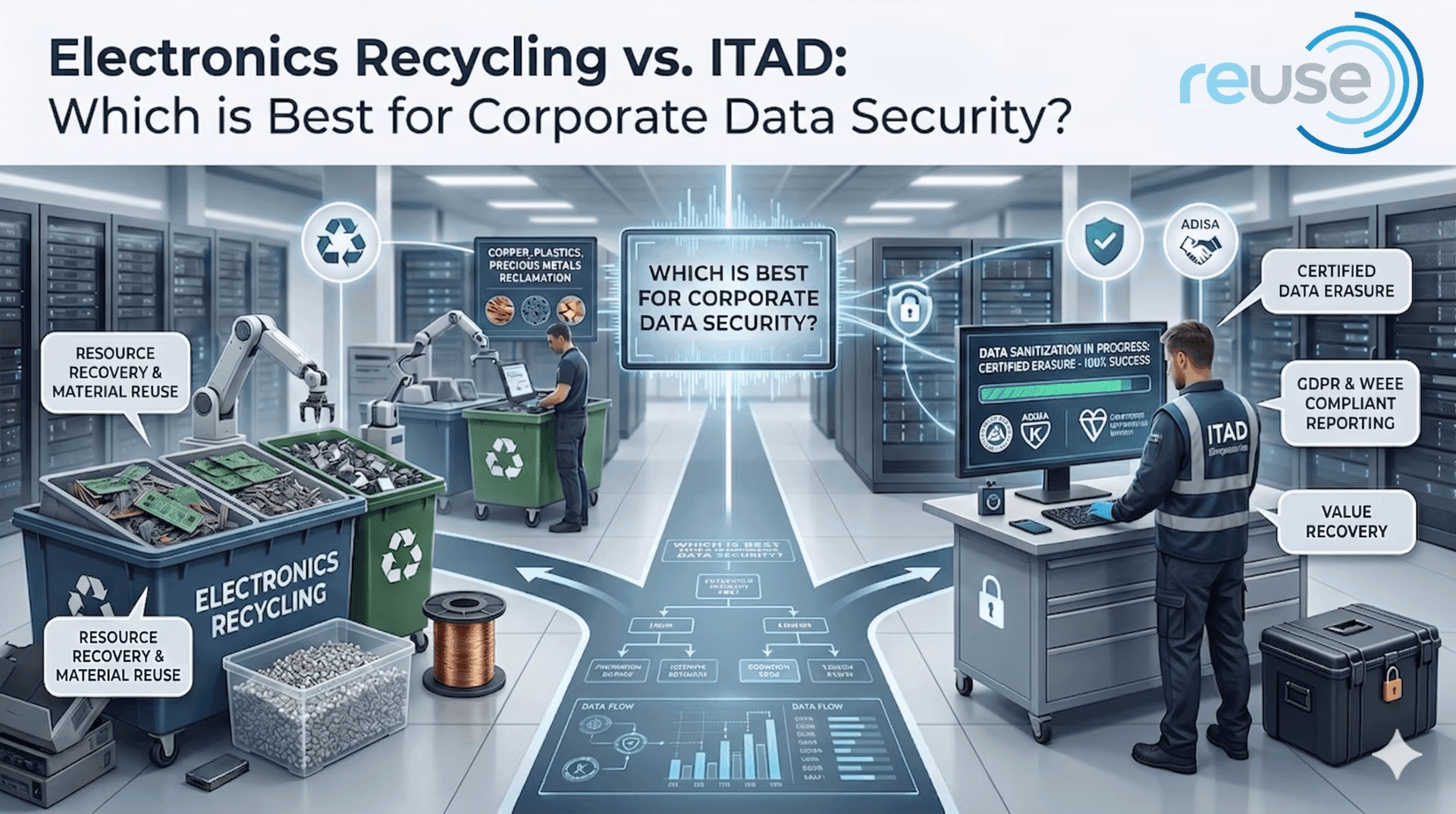
At its core, secure electronics recycling focuses on the environmentally responsible disposal of electronic equipment, with a primary goal of reducing electronic waste and recovering reusable materials. This process is primarily focused on material recovery, breaking down obsolete, damaged, or low-value equipment into base commodities such as plastics, copper, aluminium, and gold. While this prevents hazardous materials from contaminating landfills, electronics recycling is fundamentally a linear end-of-life solution. It treats your hardware as scrap. Crucially, while some recycling facilities perform basic data removal, verified data security is not their primary operational focus.
What is IT Asset Disposition (ITAD)?
ITAD, conversely, is a comprehensive lifecycle management process for retired IT assets. ITAD treats decommissioned hardware not as waste, but as persistent corporate assets that retain residual financial value and, more importantly, active data risk. A mature ITAD programme encompasses secure logistics, serialised asset tracking, certified data destruction, and device remarketing. In the ITAD model, physical material recovery (recycling) is explicitly viewed as the final, last-resort step—applied only when hardware is fundamentally irrecoverable or when an organisation's risk appetite mandates total physical destruction.
The Security Divide: Why Data Security Recycling Requires ITAD
The most severe risk associated with choosing basic electronics recycling over ITAD is the assumption that physical dismantling inherently destroys digital data. It does not.
Modern storage media, such as Solid State Drives (SSDs) and NVMe chips, can store vast quantities of personally identifiable information (PII) on microchips measuring mere millimetres across. If an organisation hands data-bearing equipment to a free or low-cost recycling service, there is a high probability that the devices will be shipped downstream to less-regulated facilities. If a single flash memory chip survives the crude shredding processes used in standard material recovery, the data remains fully intact and vulnerable to extraction.
Cybercriminals actively target poorly managed corporate e-waste streams. They retrieve discarded hardware to extract confidential information, which is subsequently weaponised for ransomware extortion, financial fraud, and corporate espionage. To mitigate this, a process rooted in true data security recycling must be implemented. ITAD providers systematically neutralise this threat by executing certified data sanitisation or precision physical destruction before the asset ever enters a downstream recycling channel.
WEEE Regulations and Environmental Duty of Care
Alongside data laws, businesses must comply with Waste Electrical and Electronic Equipment (WEEE) regulations, which mandate the responsible collection and treatment of electronic waste. Proper ITAD ensures compliance through the meticulous generation of Waste Transfer Notes (for non-hazardous waste) and Hazardous Waste Consignment Notes (for hazardous items like lead-acid batteries and CRT monitors). These documents create a legally defensible chain of custody, proving that your organisation fulfilled its environmental duty of care.
Advanced Data Sanitisation vs. Physical Destruction
A cornerstone of the ITAD process is ensuring that data is irreversibly eradicated. Standard file deletion or factory resets simply remove the directory pointer to the file, leaving the binary data completely intact and easily recoverable using forensic software. ITAD providers utilise advanced, verified methods:
- Data Sanitisation (Wiping): This involves using specialised software to algorithmically overwrite existing data with random patterns. Aligned with standards like HMG Infosec Level 5 Enhanced, this non-destructive method permanently erases data while preserving the physical drive. This is crucial for organisations looking to recover value through hardware resale.
- Degaussing: This method uses powerful industrial electromagnets to permanently disrupt the magnetic domains on legacy hard disk drives (HDDs) and backup tapes, rendering them completely unreadable.
- Physical Destruction (Shredding): For highly classified data, or for modern SSDs that cannot be degaussed, physical shredding reduces the media to fragments as small as 2mm. While this provides the highest level of absolute security, it destroys all residual financial value.
The Commercial Advantage: Asset Recovery and Remarketing Value
Perhaps the most compelling argument for adopting ITAD over basic electronics recycling is the transition of IT disposal from a sunk cost into a revenue-generating opportunity. By prioritising secure data sanitisation and skilled refurbishment, ITAD vendors can reintroduce high-performance corporate infrastructure—such as late-model laptops and data centre servers—into secondary retail or wholesale markets.
This asset recovery process unlocks significant remarketing value. For example, businesses can routinely recover up to 40% of the original value of reconditioned laptops and desktop workstations. This recovered revenue can be systematically reinvested to offset the costs of new IT refresh cycles.
When engaging an ITAD partner, businesses typically encounter two primary commercial models:
Revenue Share (Consignment)
The ITAD vendor processes, sanitises, and resells the equipment, returning a pre-negotiated percentage of the final sale price (often 60–70%) to the corporate client. This model typically yields the highest overall payout.
Direct Purchase (Buyback)
The vendor evaluates the inventory and offers a fixed, upfront capital payment to purchase the estate outright. This model is ideal for newer devices and transfers all secondary market risk to the vendor.
True profitability in ITAD balances this recovered value against operational fees, such as secure logistics and NIST-compliant data destruction costs (typically £4-£8 per drive). If the assets are heavily damaged or technically obsolete, the processing costs will outstrip the residual value, making secure physical recycling the most economical fallback.
Strategic Procurement: How to Choose a Reputable ITAD Partner
To shield your organisation from regulatory fines and data breaches, selecting an ITAD vendor requires rigorous due diligence. Ensure your prospective partner adheres to the following frameworks:
- ADISA ICT Asset Recovery Standard 8.0: This is the UK's definitive, ICO-approved certification for IT asset disposal. ADISA certification guarantees that the vendor's processes align strictly with UK GDPR. It utilises a Data Impact Assurance Level (DIAL) rating system (from 1 to 3) to match the vendor's security protocols with your organisation's specific risk appetite and data sensitivity.
- ISO 27001: This international standard ensures the vendor maintains robust Information Security Management Systems, encompassing premises security, access controls, and incident response.
- BS 7858 Personnel Vetting: The most advanced cryptographic wiping software is useless if the personnel handling the servers are compromised. Ensure the vendor strictly enforces BS 7858 security screening for all staff, which includes deep employment history, criminal record, and financial status checks.
- Secure Chain of Custody: Demand GPS-tracked logistics, zero-subcontracting for collections, and individualised Certificates of Data Destruction tied to specific device serial numbers.
Conclusion: Making the Right Choice for Your Business
When evaluating the "ITAD vs electronics recycling" dynamic, the conclusion is unequivocal. While standard electronics recycling plays a vital role in keeping toxic materials out of landfills, it is entirely insufficient for managing data-bearing corporate infrastructure.
Improper corporate e-waste disposal creates unacceptable vulnerabilities, risking catastrophic data breaches, severe UK GDPR financial penalties, and irreversible brand damage. By partnering with a certified ITAD provider, businesses can ensure airtight data sanitisation, maintain exhaustive regulatory compliance, support circular economy sustainability goals, and recover vital capital through strategic asset remarketing.
Protect your reputation and your bottom line. Transition away from basic disposal and integrate a secure, certified ITAD programme into your overarching information security strategy today.
Don't risk data breaches. Ensure UK GDPR compliance and recover hardware value—speak with our team today.